About Sarcomatoid Mesothelioma
Mesothelioma is a cancer that attacks the lubricative layer lining the inside of the chest and abdomen and the internal organs. Pathologists categorize mesothelioma cancer cases according to levels of criteria, which are as follows:Location:
* Lungs (pleural mesothelioma)
* Abdomen (peritoneal mesothelioma)
* Heart (pericardial mesothelioma)
Stage:
* Stage 1 Mesothelioma - Cancer cells have started to form
* Stage 2 Mesothelioma - Cancer has spread locally
* Stage 3 Mesothelioma - Cancer has spread to adjoining areas
* Stage 4 Mesothelioma - Cancer has begun to metastasize
Cellular Structure:
* Epithelial (organized and structured)
* Sarcomatoid (random and irregular)
* Biphasic (a mix of epithelial and sarcomatoid)
* Desoplastic (a variation of the sarcomatoid variety)
Cellular structure is determined by an actual visual examination of the cells under a microscope.
About Sarcomatoid Mesothelioma
Sarcomatoid Mesothelioma accounts for approximately 10 to 15 percent of all diagnoses. The mesothelioma cell types in this case are elongated and spindle-shaped, and are arranged in a rather haphazard way. Sarcomatoid cells also lack a nucleus, unlike epithelioid cells, which have clearly visible nuclei.
The desoplastic variety of sarcomatoid mesothelioma is difficult to distinguish from healthy tissue in many cases, making an accurate mesothelioma diagnosis challenging.
Diagnosis
Once mesothelioma symptoms have been cataloged and a history of asbestos exposure determined, the next step is to look inside the body - initially with x-rays, followed up by more sophisticated imaging such as CT scans or MRIs. If these images reveal serious abnormalities, a biopsy (tissue samples) will be ordered. These are examined and analyzed at a lab, which usually confirms or contradicts the diagnosis.
When it comes to the sarcomatoid mesothelioma, traditional methods of biopsy pose additional challenges; the normal "needle core" method often results in false information, as sarcomatoid cells are often similar in appearance to benign fibrous tissue. Additionally, histological methods of diagnosis often make it difficult to distinguish between sarcomatoid mesothelioma and other types of unrelated sarcomatoid cancers.
A precise and accurate diagnosis is vital, because a misdiagnosis can lead to an inappropriate course of mesothelioma treatment being prescribed; it is a good idea to get a second and even a third opinion if mesothelioma is suspected.
Treatment Options
Although the details will differ depending on the individual case, all forms of cancer are treated through some combination of surgery, radiation therapy, and chemotherapy. How these are administered depends on the location and stage of the cancer.
Unfortunately, sarcomatoid mesothelioma is notoriously resistant to treatment, and the mesothelioma prognosis is not good. The average mesothelioma survival rate between diagnosis and death is seven months.
Source
Hammer, Samuel P. "Macroscopic, Histologic, Histochemical, Immunohistochemical, and Ultrastructural Features of Mesothelioma." Society of Ultrastructural Pathology Companion Meeting, 27 February 2005, http://sup.ultrakohl.com/Uscap/uscap05/meso1.pdf
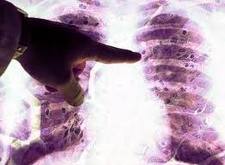
The Sarcomatoid Pleural Mesothelioma
Sarcomatoid mesothelioma accounts for approximately 7 to 20 percent of all mesothelioma cases diagnosed. The other two subtypes of mesothelioma include epithelial and biphasic, which are more common than sarcomatoid. A variant form of sarcomatoid is desmoplastic mesothelioma. This form of mesothelioma is considered the most difficult one to diagnose because of its similarity to sarcomatoid and the fact that the cells can be misdiagnosed as benign fibrous tissue.Sarcomatoid mesothelioma cells are usually elongated and spindle-shaped. These cells tend to be irregular in size and often overlap one another. When analyzed under a microscope, sarcomatoid mesothelioma cells may resemble another form of cancer called pulmonary sarcomatoid carcinoma. If you or a loved one has been diagnosed with pulmonary sarcomatoid carcinoma, a second opinion from a qualified physician is recommended to make sure an accurate diagnosis has been made.
Treatment options can differ significantly depending on what form of cancer a patient has been diagnosed with. In the case of sarcomatoid mesothelioma, where prognosis is often very poor, a patient may elect a treatment regimen that is much more aggressive since this form of cancer is typically resistant to treatment. Such options may include surgery, chemotherapy or radiation therapy.
Regardless of the subtype a patient may exhibit, developing pleural mesothelioma is almost exclusively caused by asbestos exposure. Exposure to this naturally occurring substance can occur by either inhaling or ingesting asbestos fibers. In many cases, these fibers have become airborne due to the disturbance of asbestos-containing materials. While complications may not present themselves immediately after someone has been exposed, symptoms of pleural mesothelioma can develop between 20 and 50 years later in life.
Sources
1. www.cancer.org
2. www.cancer.gov
Sarcomatoid Mesothelioma Survival

who are diagnosed with sarcomatoid mesothelioma face a much poorer outlook than those with the more common epithelioid form of the disease, according to a study published online January 15 in the journal, Modern Pathology. The study also found evidence linking sarcomatoid mesothelioma with higher asbestos exposures, and confirmed that proteins called cytokeratins (CK) are among the most useful markers for diagnosing this type of mesothelioma.
Sarcomatoid mesothelioma is the least common form of this already rare cancer, comprising only about 10 percent of the 2,000 to 3,000 mesothelioma cases diagnosed in the U.S. each year. It is also the most aggressive type of this disease. Studies find that patients with sarcomatoid mesothelioma survive for an average of just five to six months.
That short survival time makes it essential for doctors to diagnose sarcomatoid mesothelioma as quickly as possible. “Accurate diagnosis of mesothelioma is important both for optimal treatment and determining progress,” says study author Victor L. Roggli, MD, Professor of Pathology at Duke University Medical Center. Yet sarcomatoid mesothelioma is among the most difficult forms of the disease to diagnose with any accuracy, because it can look very similar to other non-cancerous and cancerous tumors, including other sarcomas (a cancer that forms in connective tissue). “Some sarcomas that sarcomatoid mesothelioma can be confused with do better in terms of survival,” Dr. Roggli says.
The researchers say that immunohistochemistry—a diagnostic staining technique that looks for protein markers in cells that are specific to certain cancers—is not as useful for sarcomatoid tumors as it is for other types of mesothelioma. “Special stains are of rather limited benefit and if the pathologist relies on staining of the tumor alone, mistakes can be made,” Dr. Roggli says. However, of the immunohistochemical markers available, CK is among the most useful for diagnosing sarcomatoid mesothelioma. “The best approach to diagnosis is close communication between the radiologist looking at the films, the doctor who takes the biopsies (surgeon, radiologist, or pulmonologist), and the pathologist,” he says.
To learn more about this aggressive cancer, Dr. Roggli and his colleagues examined database records taken from 326 patients. They discovered that most of the patients with sarcomatoid mesothelioma had cancer in the chest area (pleura).
Using x-ray analysis, the authors found that patients had more asbestos fibers in their tissue samples compared with patients who had non-sarcomatoid tumors. “Our findings indicate that on average, sarcomatoid mesotheliomas are associated with heavier exposures to asbestos than the other mesothelioma types,” Dr. Roggli says. Most of those fibers were the amosite form of asbestos.
The researchers also confirmed that sarcomatoid mesotheliomas have a particularly dire prognosis compared with other forms of this cancer. In the study, only 30 percent of patients with sarcomatoid mesothelioma were alive at six months, and only 10 percent were alive after a year. By comparison, survival rates for the more common epithelioid mesothelioma are in the range of 12 to 24 months.
“Our study is the largest by far of this relatively rare form of a rare cancer (mesothelioma),” says Dr. Roggli. “Our findings confirm reports by others that this type has a rather grim prognosis, a strong association with asbestos, and location mainly in the chest.”
What is This-Malignant Sarcomatoid Mesothelioma?
Malignant sarcomatoid mesothelioma is the least common of the four cellular types. It accounts for approximately 7 to 20 percent of cases. When viewed under a microscope,the malignant cells appear as elongated spindle-shaped cells that are irregularly shaped and often overlap one another.
Desmoplastic mesothelioma is considered a variant of sarcomatoid mesothelioma. This form is likely the most difficult of all mesotheliomas to diagnose. When desmoplastic mesothelioma invades or metastasizes, the cells can appear very bland and can be misdiagnosed as benign fibrous tissue. Medical experts say this form should not be diagnosed with a needle core biopsy. It's important to know that malignant sarcomatoid mesothelioma is sometimes difficult to diagnose on the basis of histological methods. For example, cells of another type of cancer called pulmonary sarcomatoid carcinoma are very similar in appearance (as well as other characteristics) to malignant sarcomatoid mesothelioma.
For this reason, if you are diagnosed with cancer and you know that you have been exposed to asbestos at some time in the past, obtaining a second diagnostic opinion may be important. Different types of cancer vary widely in terms of prognosis and treatment options, and if misdiagnosed, patients may not receive the most appropriate treatment for their cancer.
Treatment and Prognosis
Each of the four cellular forms of mesothelioma is generally treated in the same way. Treatment is not based on the specific type of cells involved, but instead on the location of tumors and the stage of the cancer. Each type of cancer responds to treatment very differently. In general, patients with malignant sarcomatoid mesothelioma have a poorer prognosis than patients with the epithelioid type , as sarcomatoid cancers are more aggressive and more resistant to treatment. Unfortunately, the general prognosis for all the different types is usually poor, and the difference in prognosis between sarcomatoid, epithelioid, biphasic and desmoplastic cancers may amount to as little as a few months.
Biopsy and Histopathology
Patients undergoing medical evaluation to ascertain a diagnosis of mesothelioma will also have to undergo a variety of medical tests to determine the location and nature of the cancer.